
By Kithsiri Senadeera
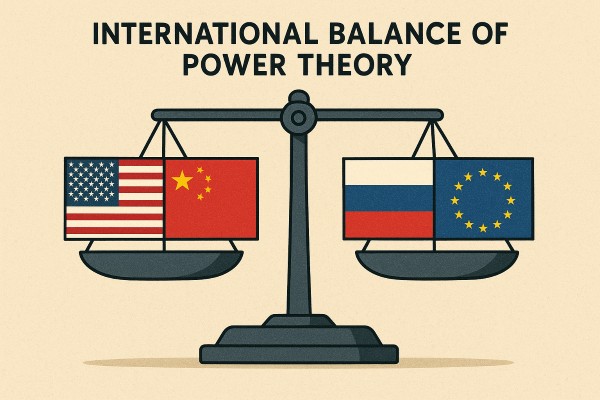
Preamble
The first article provided an overview of the concept of balance of power theory and emphasised its importance of understanding of the complexities of global politics. In the second article (part 2), definitions of balance of power given by leading scholars in International Relations (IR) and an overview of the major features were elucidated. This article attempts to give an overview of the international system’s power structure by first analysing some key concepts in power analysis and the role of various Actors of International Power System. This subject is very complex with different interpretations by various IR scholars. I have made an attempt to explicate as much possible.
The birth of the modern international system
The birth of the modern international system can be traced back to the peace of Westphalia of 1648. The period ushered in a new phase in the international system which saw the demise of the feudal agricultural and religious-political world order – end of the Holy Roman Empire – that had long dominated the political landscape of Europe. This treaty was the first to use international law to influence relations between independent states and for the creation of the concept of reign, non-intervention in interior affairs of another nation, territorial unity, and legal equality between the independent nations. This treaty established the state as the main actor in global politics. From that point forward, the international system has consisted primarily of relations among nation-states. Westphalia treaty of 1648 heralded a foundation for the modern state system known as the balance of power system. The new system was based on its fundamental principle of states sovereignty.
Actors of International Power System
Although State actors are the primary determinant of international affairs represented by governments and have recognized sovereignty, the emergence and evolving role of Non-state actors (NSAs) during in the post-war era of the twentieth century became a distinct entity in modern international affairs. Therefore the international political system is surrounded with State actors and Non-state actors, two distinct entities that play significant roles in shaping global politics and international power structure. Both actors have the potential to impact international relations, but they differ in terms of their structure, authority, and methods of influence.
State actors traditionally play a central role in international relations. State actors, also known as nation-states, are political entities with defined territories, populations, and governments that exercise authority and sovereignty over their territories. They engage in diplomacy, negotiate treaties, and participate in international organizations. States have the power to declare war, establish alliances, and shape global policies. Their influence is often derived from their military capabilities, economic strength, and diplomatic relations. State actors are recognized as sovereign entities and have the ability to represent their citizens’ interests on the global stage.
A non-state actor (NSA) is an individual or organization with significant political influence, not allied with or controlled by any country or state. Operating independently from governmental authority, these entities often extend their activities across national borders. Their impact on political, economic, or social affairs stems from their independence and ability to mobilize resources or public opinion. While their legal standing under international law varies, many non-state actors possess some legal capacity, limited by their specific function within the international legal order.
Non-state actors (NSA) have gained increasing prominence in recent decades. Non-state actors often fill gaps left by state actors, particularly in areas such as humanitarian assistance, human rights advocacy, and environmental protection. NGOs, for example, play a crucial role in providing aid and support to vulnerable populations, often in collaboration with state actors and international organizations. Similarly, multinational corporations can have significant economic influence and shape global trade and investment patterns through Direct Foreign Investments (DFI)
Non-state actors can include organizations such as social groups, movements, multinational corporations, non-governmental organizations (NGOs), terrorist groups, aid agencies, lobby groups religious organizations, and business magnates such as Elon Musk and, Bill Gates..
Non-state actors typically operated by individuals, groups or institutions to address various social, political, environmental, and humanitarian issues e.g. Well-known examples of non-state actors include; Human Rights Watch (HRW), the Red Cross, Doctors Without Borders, Environmental Defence Fund, Amnesty International, Oxfam international, World Vision, multinational corporations, terrorist groups, criminal organizations (drug cartels), religious organizations, and grassroots movements. Today, NGOs possess the role to intervene in the humanitarian field anywhere in the world; even they have the ability to influence the country. NGOs have effectively come to function as replacements for state-level administrative authority, especially with regard to humanitarian services. These actors often operate across borders and challenge the traditional state-centric framework of international relations.
The Shifting Global Stage
The rise and diversification of non-state actors represents one of the most defining trends of the 21st century. This shift isn’t merely about more players on the field—it’s about fundamental changes in how power is exercised, how global problems are addressed, and how international order is maintained. The rise of NSAs is fundamentally reshaping global governance. Power is becoming more diffused, moving away from an exclusively state-centric model towards a more networked structure where states share the stage with IGOs, NGOs, MNCs and other social movements. Experts expect the trend to continue whereby non-state actors increasingly influence the position and policies of national states to continue in different areas and in different ways, to influence the international power system.
According to some commentators, the increased prevalence and influence of non-state actors reflects growing dissatisfaction among the global public with traditional methods of power distribution. Some people view non-state actors as legitimate and preferable alternatives to state-based governance, believing non-state actors are more effectively and efficiently provide basic needs of underprivileged population groups. A good example is when tsunami caused major damage to Sri Lanka most foreign donors refused and reluctant to give aid to the Government of Sri Lanka (GoSL) but to NGOs.
To be continued
Kithsiri Senadeera